A Museum at the Crossroads of Central Asia and Ladakh
The Central Asian Museum in Leh is dedicated to documenting and presenting the historical connections between Ladakh and the wider Central Asian world.
Who We Are
Ladakh's Place in a Larger World
For centuries, Leh occupied an important position within networks of trade, travel and cultural exchange that connected the Indian subcontinent with Central Asia, Tibet, Kashmir and other regions of the Himalayan and trans-Himalayan world.
Merchants, pilgrims, travellers and artisans moved through these routes, bringing with them goods, ideas, languages, beliefs, artistic traditions and material cultures. Leh developed as an important trading centre within these networks, and the town's architecture, communities and material culture continue to reflect this layered history.
The museum seeks to make these connections accessible to contemporary audiences by bringing together objects and stories that illustrate Ladakh's place within this larger historical landscape.
Leh and the Central Asian Connection
Where the Routes Met
Leh not as an isolated Himalayan settlement, but as part of a much wider network of movement and exchange.
Leh's location at the intersection of several historic routes played an important role in shaping the town. The town was connected through routes leading towards Kashmir and the plains of the Indian subcontinent, across the Karakoram towards Central Asia, and eastwards towards Tibet.
The historic trade in pashmina, wool, textiles, carpets, spices, tea, precious stones and other commodities brought merchants and travellers from different regions to Leh. These encounters also resulted in exchanges of artistic techniques, architectural traditions, foodways, clothing, languages and religious practices.
The Central Asian Museum provides a space to explore this history and to understand Leh not as an isolated Himalayan settlement, but as part of a much wider network of movement and exchange.
The History of the Site
Where the Caravans Once Rested
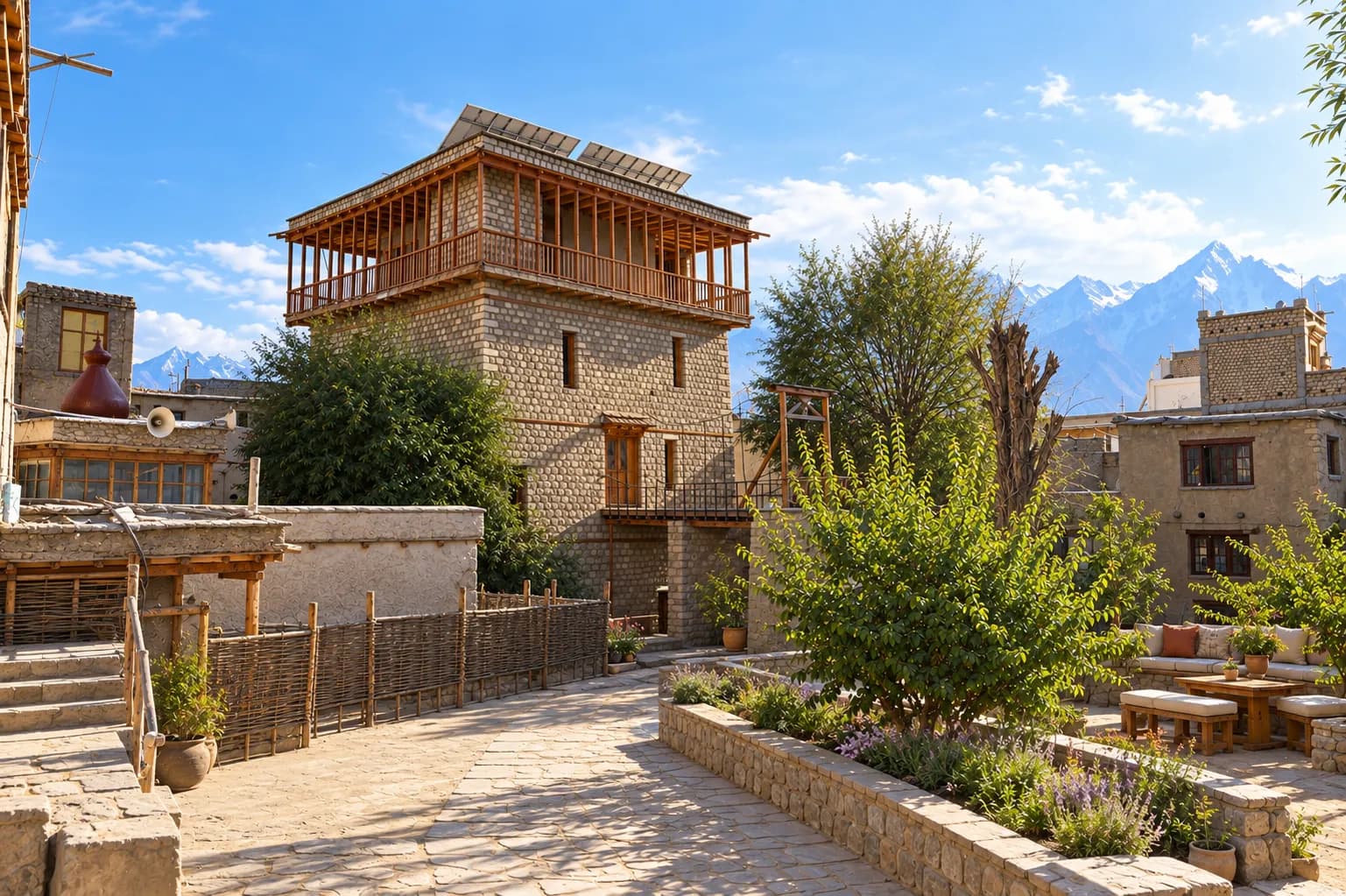
The museum is located in the Tsas Soma Garden, within the historic urban fabric of Leh, where the oldest mosque of Leh town is also situated.
The site on which the museum stands has its own history. Before becoming a museum, the property was the resting ground of the trade caravans. Its location within the historic town is significant, as it places the museum within the same landscape through which merchants and travellers once moved.
How the Museum Came to Be
From Caravan Ground to Museum
For centuries, Ladakh has been an important crossroads of Central Asian caravan trade. Like few other regions, Ladakh's culture has been shaped by the transmission of goods and ideas from such disparate regions as Tibet, Yarkand, Kashmir, Afghanistan and city states like Samarkand and Bukhara, connected by the various branches of the Silk Road.
17th century
Ladakhi king Senge Namgyal gave permission to traders to build Leh's first mosque on the grounds where the caravans camped.
Mid-20th century
Political events in the region brought cross-border trade to an end, leaving Ladakh in relative geographic and cultural isolation.
2007
Tibet Heritage Fund (THF), in cooperation with the Anjuman Moin-ul-Islam society, restored the mosque.
2007
The idea for a museum was launched by Saleem Beg, Director of J&K Tourism, and the eminent Ladakhi historian Abdul Ghani Sheikh, to commemorate this facet of Ladakh's history and to educate the public about it. The project was mainly sponsored by the Ministry of Culture and Tourism, Jammu & Kashmir State.
22 August 2008
The foundation stone was laid and construction began. Ladakh's building season runs from April to October.
June 2011
The affiliated Trans-Himalayan Research Library opened.
23–24 August 2011
The Central Asian Museum opened to the public for a special preview, with its first artefacts and a photographic exhibition.
7 October 2015
A completion ceremony marked the finished museum complex.
2026
A committee was formed to run the museum, registered as the Society for the Preservation of Trans-Himalayan Art and Culture. THF/LOTI were asked to design and build the museum.
Our Ethos
“Heritage is not simply a collection of old
objects. It is a living record of the people,
communities, journeys and exchanges that have
shaped a place.”
The museum therefore seeks to connect objects with the stories behind them: who made them, who used them, where they travelled from, how they reached Ladakh and what they tell us about the historical relationships between different communities and regions.
Vision & Mission
What the Museum Aims to Do
Vision: Our vision is to preserve and celebrate Ladakh’s diverse heritage and its historic connections with Central Asia, Tibet and the Himalayan world, while making it accessible and meaningful for future generations.
01
Preserve and document material evidence of Ladakh's historical connections with Central Asia and neighbouring regions.
02
Make the history of trade, travel and cultural exchange accessible to local communities, visitors, students and researchers.
03
Encourage greater understanding of Ladakh's diverse cultural heritage.
04
Support research, documentation and interpretation of the museum's collections.
05
Promote responsible care and conservation of cultural objects.
06
Create opportunities for education, dialogue, exhibitions, workshops and community engagement.
07
Position Leh's Central Asian heritage within the broader history of the Himalayan and trans-Himalayan world.
The Building
A Fortress Tower, Built by Hand
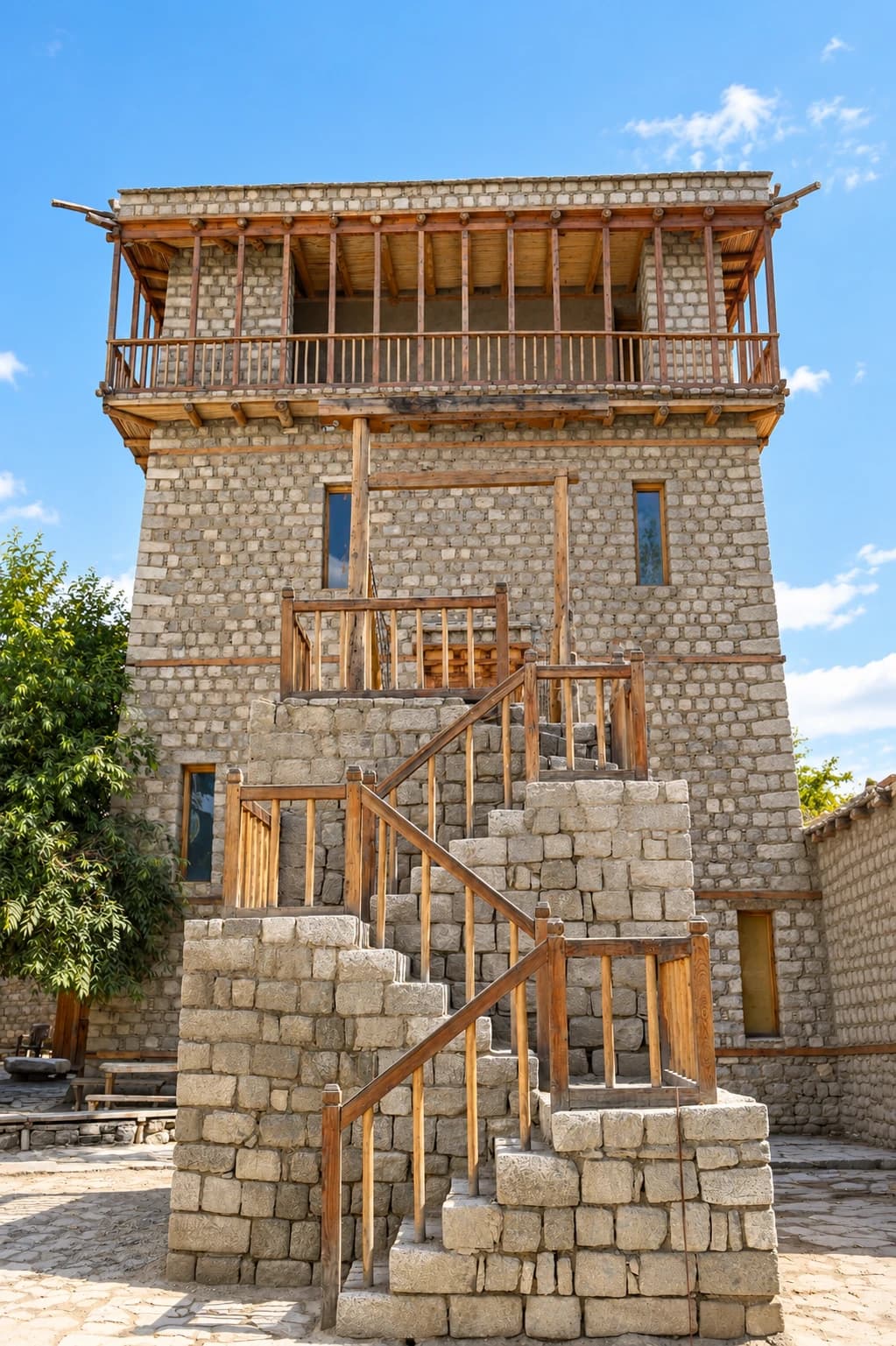
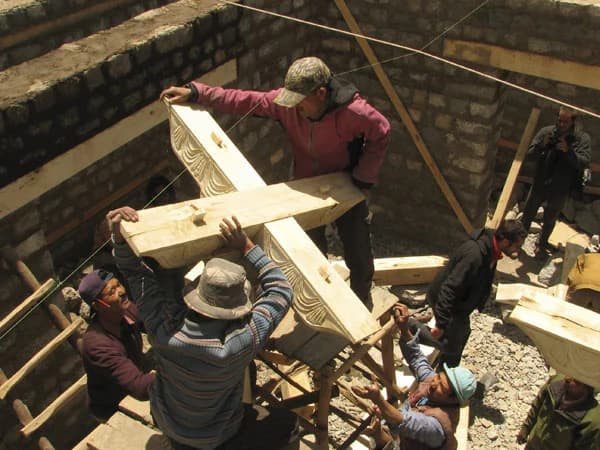
Designed by André Alexander in the shape of a Tibetan-Ladakhi fortress tower with a contemporary edge, the museum was built entirely by hand from local stone, timber and mud, around a carved wooden lantern that connects all four levels.
People
How the Museum Is Run
The Central Asian Museum is a property of the Anjuman Moin-ul-Islam, which has entrusted its management to a dedicated museum committee responsible for overseeing its functioning, administration and long-term development.
The museum is managed through a collaborative structure that brings together members of the governing committee, advisors and the museum's day-to-day staff. This structure allows the museum to maintain its collections, welcome visitors, organise programmes and exhibitions, and work towards its broader mission of preserving and interpreting the cultural heritage of Ladakh and its connections with Central Asia.
The museum committee provides overall guidance and institutional oversight, while the museum staff are responsible for its daily operations and visitor services.
Museum Committee
Director
Dr Noor Jahan Chunka
Provides overall leadership and direction to the museum, oversees its programmes and activities, and works towards its institutional development and sustainability.
Advisors
- Shri Ghulam Mustafa (Sr. Advisor)
- Dr Noor Mohd.
- Shri Ghulam Mohd Kakpori
Provide guidance and expertise on matters relating to the museum's collections, heritage, exhibitions, research, conservation and future initiatives.
General Secretary
Haji Mohd Amin Galwan
Supports the administration and coordination of the museum's activities, facilitates communication between the committee and staff, and assists in implementing decisions.
Treasurer
Egr. Zeeshan Ahmad Mir
Oversees the museum's financial administration, including accounts, expenditure and financial planning.
Museum Staff
Museum Assistant
Supports daily administration, collection care, documentation, visitor management, educational activities and general museum operations.
Ticketing Staff
Manages visitor entry, ticketing and basic visitor information, while also assisting with maintaining visitor records.
Security Guard
Ensures the safety and security of the museum building, collections, staff and visitors.
Janitor
Maintains the cleanliness and upkeep of the museum premises, ensuring that the galleries and public spaces remain clean, safe and welcoming.
Together, the committee and staff work to ensure that the Central Asian Museum remains a well-managed and accessible cultural institution. While each person has a defined role, the functioning of the museum depends on collaboration between the governing committee, professional advisors and the staff who engage with the museum and its visitors every day.
The museum's people are central to its identity. Their collective work enables the museum not only to care for its collections, but also to remain connected to the community and to create a welcoming space for learning, research and engagement with Ladakh's rich cultural heritage.
A Living Museum
A Space for Conversations About Ladakh's Past, Present and Future
The Central Asian Museum is not only a place to look at objects from the past. Through exhibitions, educational programmes, workshops, talks, research and community engagement, the museum seeks to create a space where heritage can be understood as something living and continually evolving.
Situated in the heart of Leh, the museum invites visitors to explore the historical connections that have shaped the region and to consider how the movement of people, objects and ideas across mountains and borders continues to influence Ladakh today.